
Lothian Heat: a regional catalyst for community-owned heat networks

Lothian Heat is a new regional organisation exploring how large-scale heat networks could be delivered differently in the East of Scotland. Its core proposition is straightforward but ambitious: capture waste heat that is currently being thrown away, move it to where demand is highest, and deliver it at the lowest possible cost with community ownership embedded over the long term.
The organisation emerged from work on East Lothian’s Local Heat and Energy Efficiency Strategy (LHEES) led by Martin Hayman, but it quickly became clear that the opportunity extended beyond any single local authority boundary. East Lothian has a concentration of industrial and energy-related heat sources including energy-from-waste, industrial processes and, in future, data centres while nearby urban areas, particularly Edinburgh, have high heat demand but limited local supply. Lothian Heat was created to explore the potential of this mismatch.
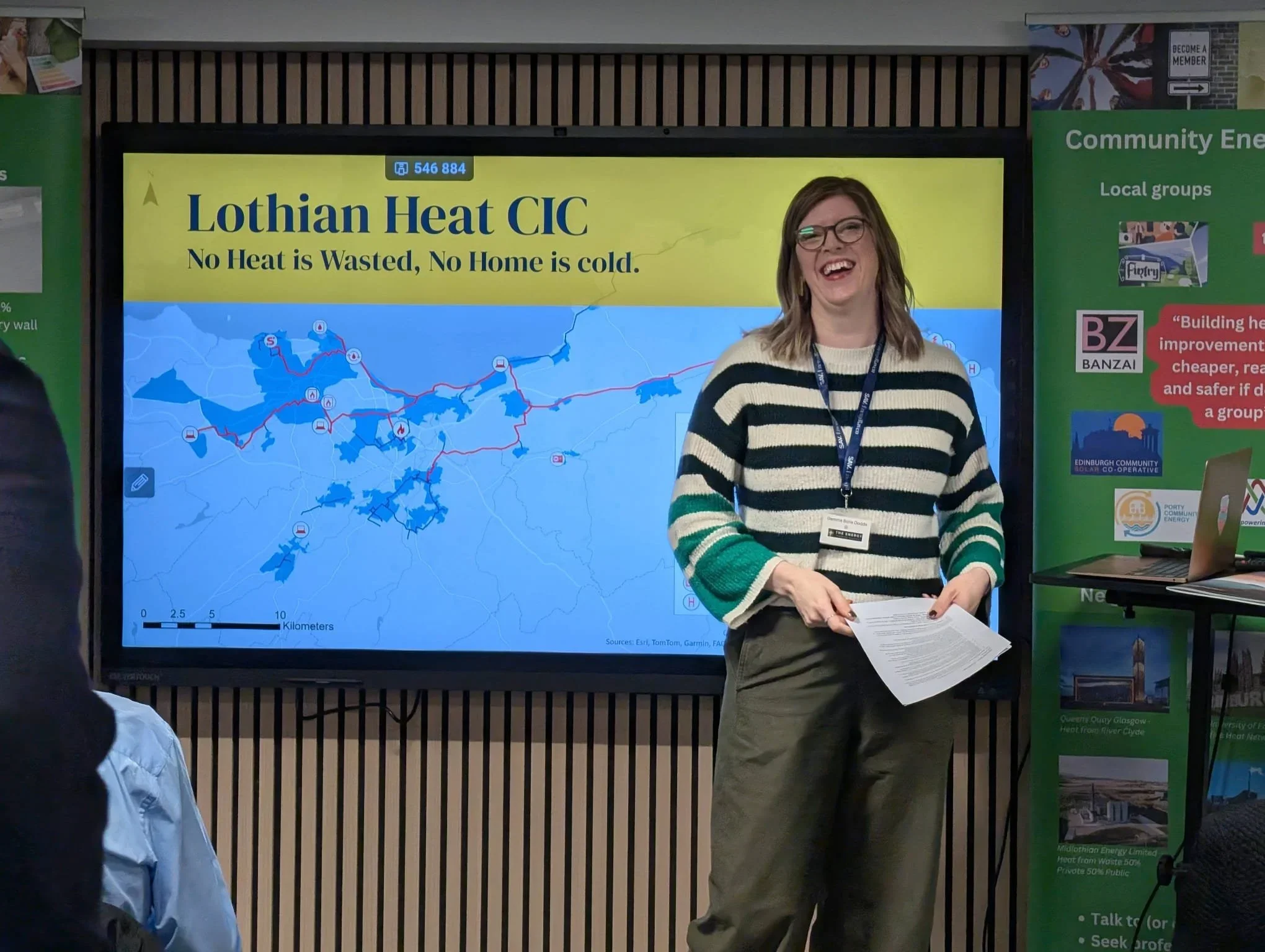
“No heat is wasted, no home is cold.”
Unlike many heat network projects in the UK, which are designed around discrete developments or neighbourhood-scale schemes, Lothian Heat is investigating infrastructure at transmission scale. That means moving large volumes of heat over longer distances, using a backbone network that can then feed local distribution systems. The model draws heavily on Scandinavian examples, where regional heat transmission is common even in relatively low-density areas.
A central part of Lothian Heat’s early work was a detailed feasibility study, funded through the charity East Lothian Community Benefits, utilising community benefits funding from East Lammermuir Community Council. Working with experienced Danish consultants Viegand Maagøe, alongside a group of local experts in policy, finance, regulation, energy, heat and community, the study tested multiple scenarios to find what approach would deliver heat at an equal or cheaper rate than gas.
The study found that while smaller schemes could work, a regional approach delivered the lowest heat prices and the strongest long-term economics by aggregating heat supply, demand, and thermal storage.
The feasibility work also focused on what customers would actually pay, something which is often underdeveloped in early-stage heat network planning. Rather than headline tariffs alone, the modelling looked at whole-system costs, including connection charges, backup systems, maintenance, and contingencies. The resulting heat price was higher than today’s gas price but competitive once boiler replacement costs, standing charges, and long-term price stability were factored in. Importantly, the modelling showed that modest public or social housing connection subsidies could bring prices close to parity with gas, while remaining cheaper than most low-carbon alternatives such as individual heat pumps.
On that basis, Lothian Heat was formally established in late 2024 as a Community Interest Company (CIC). The organisation’s goal is to act as a development vehicle to develop small scale heat networks, as well as progress regional collaboration at transmission scale. The vision is to deliver for Edinburgh and the Lothians, but also to develop a scalable model for regional heat infrastructure that can be applied elsewhere.
Governance and ownership are central to that model. Heat networks are highly capital-intensive to build, but relatively low-cost to operate once in place. In the UK, that structure has tended to favour long-term private ownership, with returns extracted over decades.
Instead, Lothian Heat is exploring an approach that allows ownership to transition over time into community or not-for-profit control. This reflects established practice in countries such as Denmark, where heat networks are required to operate on a not-for-profit basis and surpluses are either reinvested or used to reduce customer bills.
The rationale is practical rather than ideological. Once capital costs are repaid, heat networks become stable assets. Who owns that asset determines whether future efficiency gains flow back to customers or are captured as profit. Lothian Heat’s position is that public support for heat infrastructure should, where possible, translate into long-term public or community value, not just lower short-term tariffs.
Lothian Heat is working to align its plans with wider energy system objectives. Large heat networks can reduce pressure on electricity grids by centralising heat production, integrating thermal storage, and absorbing surplus renewable generation that would otherwise be curtailed. Done well, this can lower system-wide costs and reduce the need for expensive grid upgrades - savings that ultimately affect both heat and electricity bills.
While still at an early stage, the organisation has attracted significant interest from investors, policymakers and energy system stakeholders. That interest reflects both the scale of the opportunity and the fact that the UK heat network sector is still taking shape. It is also being supported politically.
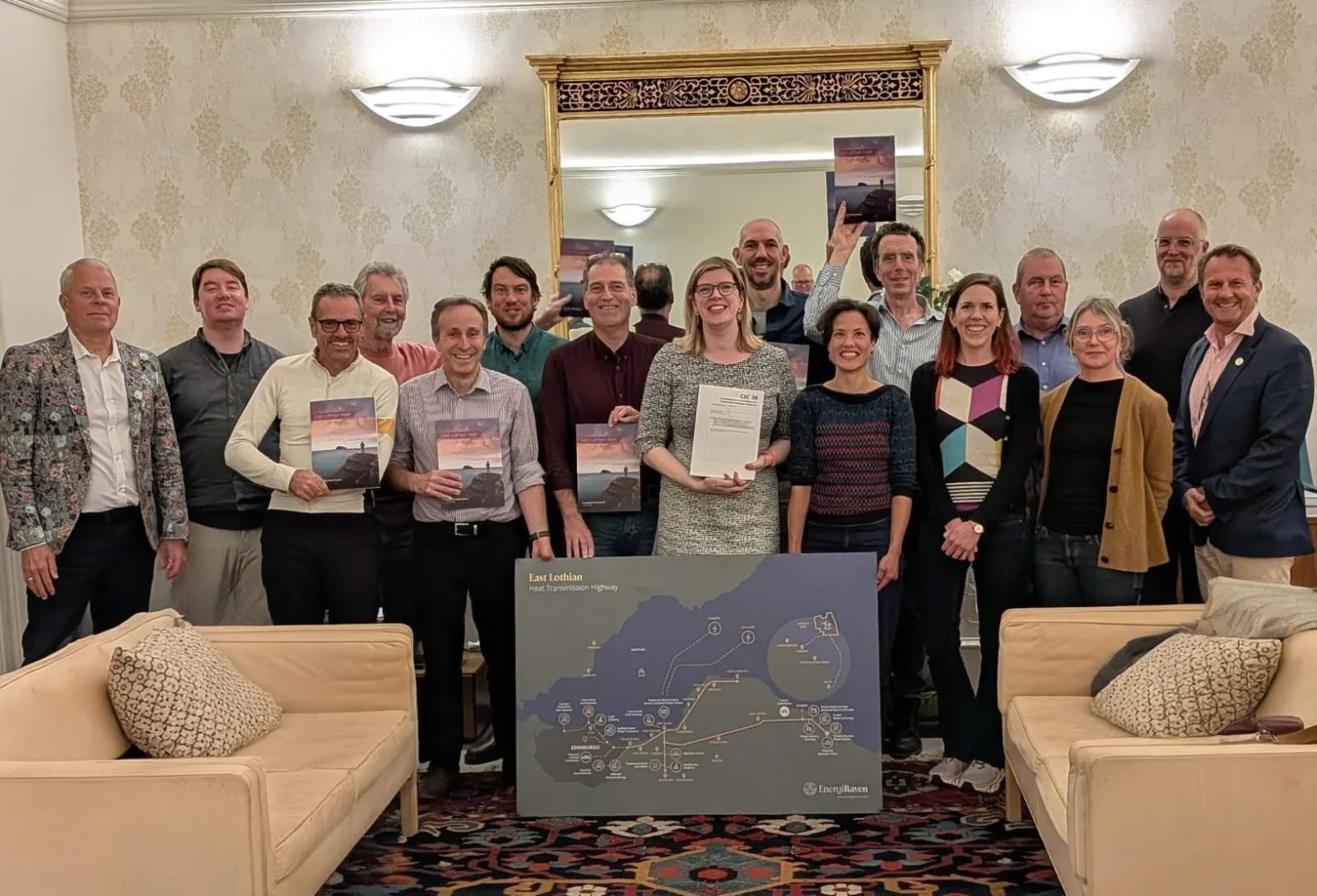
Much of the work to date has been voluntary, supported by a wide network of technical, financial and policy experts based in the region. 2026 is a big year for the organisation. The principal need is to scale up operations to meet the demand. This includes raising money to employ a full time team, working on furthering smaller-scale feasibility studies, supporting community heat teams, and working with Transition Finance Scotland and the Green Finance Institute on the regional financing opportunity.
By the end of December 2025, growing interest was reinforced by formal cross-party motions agreed by both City of Edinburgh Council and East Lothian Council to deepen collaboration with Lothian Heat CIC, signalling a strong level of political support to explore community-led heat network delivery.
Lothian Heat’s argument is that this is precisely the moment to make different choices, and bold ones. Heat is a basic service, and heat networks are long-lived infrastructure. Decisions taken now will shape costs, ownership and accountability for generations. By starting with waste heat, regional scale and customer affordability, and by treating community ownership as infrastructure-grade rather than symbolic, Lothian Heat is attempting to set a new template for how heat networks are planned and governed in Scotland.
Whether that model becomes mainstream remains to be seen. But the organisation’s development so far shows that alternative approaches are not only conceptually attractive, but technically and financially viable, provided they are designed at the right scale, and with the right priorities from the outset.
“It’s just wrong that we’re throwing away heat when people are struggling to keep their homes warm.”