
Crewe Warm & Healthy Homes

Author: Claire Cockburn, Senior Architect, Purcell
At Purcell, we have always prioritised refurbishment and adaptive reuse over demolition and new build. For our team, innovation means solving problems and finding solutions to the challenge of adapting and reusing existing buildings in a way that prolongs their life and use in a sustainable way.
In response to the climate emergency, Cheshire East Council commissioned Purcell to lead the retrofit of a series of Grade II listed railway cottages in Crewe. These Victorian homes, constructed between 1848 and 1858 for railway workers, are deeply embedded in the town’s industrial heritage and architectural identity. Their preservation and adaptation present a unique opportunity to demonstrate how historic buildings can be sensitively upgraded to meet contemporary sustainability standards without compromising their character.
A cornerstone of Purcell’s strategy was the implementation of a Local Listed Building Consent Order (LLBCO), a progressive planning mechanism that enables the local authority to grant consent for a defined scope of works across multiple listed buildings of the same typology. This approach marks a significant departure from the conventional planning process, where each property would typically require an individual Listed Building Consent application for even minor alterations. In heritage contexts, this can be a prohibitive barrier: time-consuming, costly and often discouraging for homeowners. The LLBCO removes this friction, allowing for coordinated, pre-approved interventions that are both efficient and conservation led.
The LLBCO is not merely a bureaucratic convenience; it is a strategic enabler of change. It allowed the project to move beyond isolated improvements and toward a scalable,
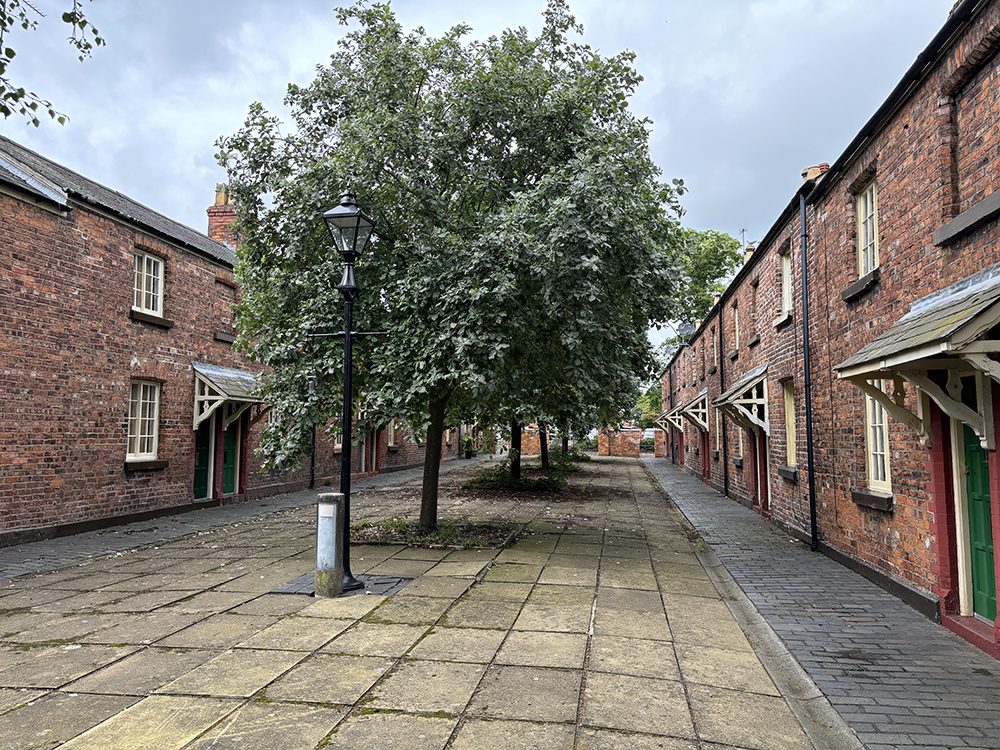
replicable model of retrofit. By establishing a shared framework of acceptable works, the LLBCO ensures consistency in design quality, material specification, and heritage sensitivity across the estate.
It empowers residents to participate in the retrofit process with confidence, knowing that the proposed measures have already been assessed and approved. It also allows the council to demonstrate leadership in climate action while safeguarding the historic environment.
Purcell’s retrofit philosophy is grounded in a whole-building approach, treating each home as a system of interconnected elements - from fabric, to services, its users, and the environmental context. This holistic view ensures that interventions are technically sound, compatible with traditional materials, and responsive to the lived experience of occupants.
The process began with a thorough understanding of each building’s history, construction, condition, and significance. Archival research, site surveys, and resident interviews informed every design decision. Repairing existing fabric was prioritised as the most sustainable option, forming the foundation of a ‘fabric first’ strategy. Issues such as damp, spalled brickwork, and defective rainwater goods were addressed before introducing thermal upgrades, ensuring that improvements perform as intended and do not exacerbate existing problems.
The retrofit hierarchy follows a logical progression: eliminate waste, mitigate inefficiencies, improve fabric performance, and finally introduce low or zero-carbon technologies. This avoids premature reliance on mechanical systems and supports long-term resilience.
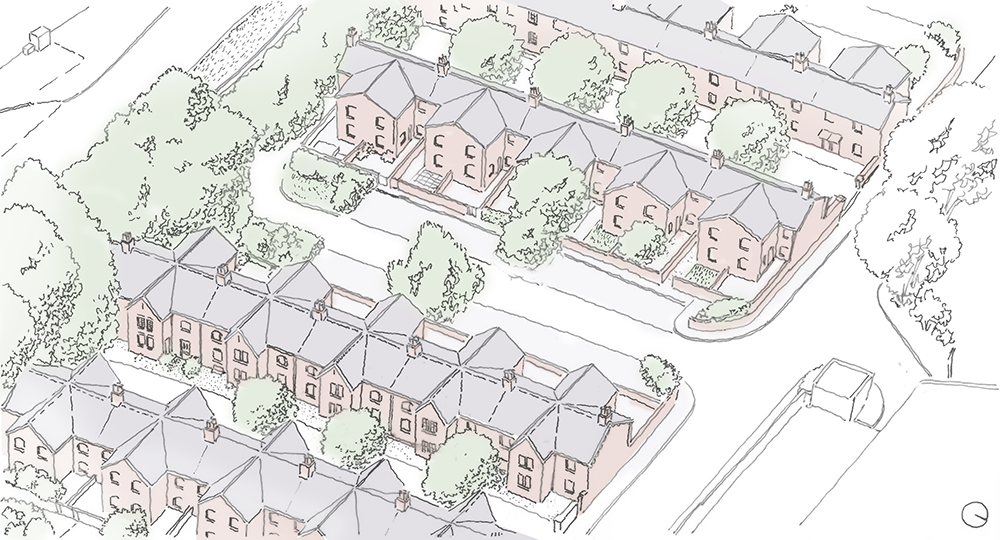
Recognising the diversity of ownership, resident preferences, and financial constraints, Purcell categorised retrofit options into Bronze, Silver, and Gold levels. These range from light-touch, low-disruption measures to deep retrofits, allowing for phased implementation based on funding availability and appetite for change. Each intervention is assessed for its impact on historic fabric, with a commitment to retaining original materials wherever possible, or replacing them sympathetically using traditional methods.
The LLBCO, granted in May 2025, was the result of close collaboration between Purcell and Cheshire East Council’s planning and conservation teams. The order includes a carefully defined list of works selected for their low heritage impact, technical feasibility, and potential for energy savings. These include installation of insulation, replacement and re-sizing of rainwater goods, removal of harmful cement pointing and repointing in lime mortar, repair and renewal of architectural features, replacement of non-original windows with double-glazed timber units, and replacement of doors with insulated equivalents.
Purcell’s design team prepared the content for the LLBCO documentation, including detailed scopes of work, heritage impact assessments, and typical details.
This ensured the LLBCO was both enforceable and aligned with conservation guidance. With the LLBCO in place, the project is now able to move confidently into the on-site delivery phase, scheduled to begin in early 2026. This case study illustrates how thoughtful retrofit strategies, underpinned by innovative planning tools like the LLBCO, can deliver meaningful sustainability outcomes in heritage contexts. The LLBCO has proven to be a catalyst for change, empowering residents, reducing carbon emissions, and preserving the architectural legacy of Crewe’s railway heritage. As the UK accelerates toward its net zero targets, this project offers a compelling model for retrofitting listed buildings at scale, without compromising their character or significance.
Written by Claire Cockburn, Senior Architect, Purcell