
Wells O' Wearie, Edinburgh
Overview
This case study project sought to demonstrate that effective thermal upgrades were possible in parts of a traditionally constructed stone building without excessive cost and disruption for the owner, nor requiring extensive removal or damage to the building fabric.
-
Existing Fabric
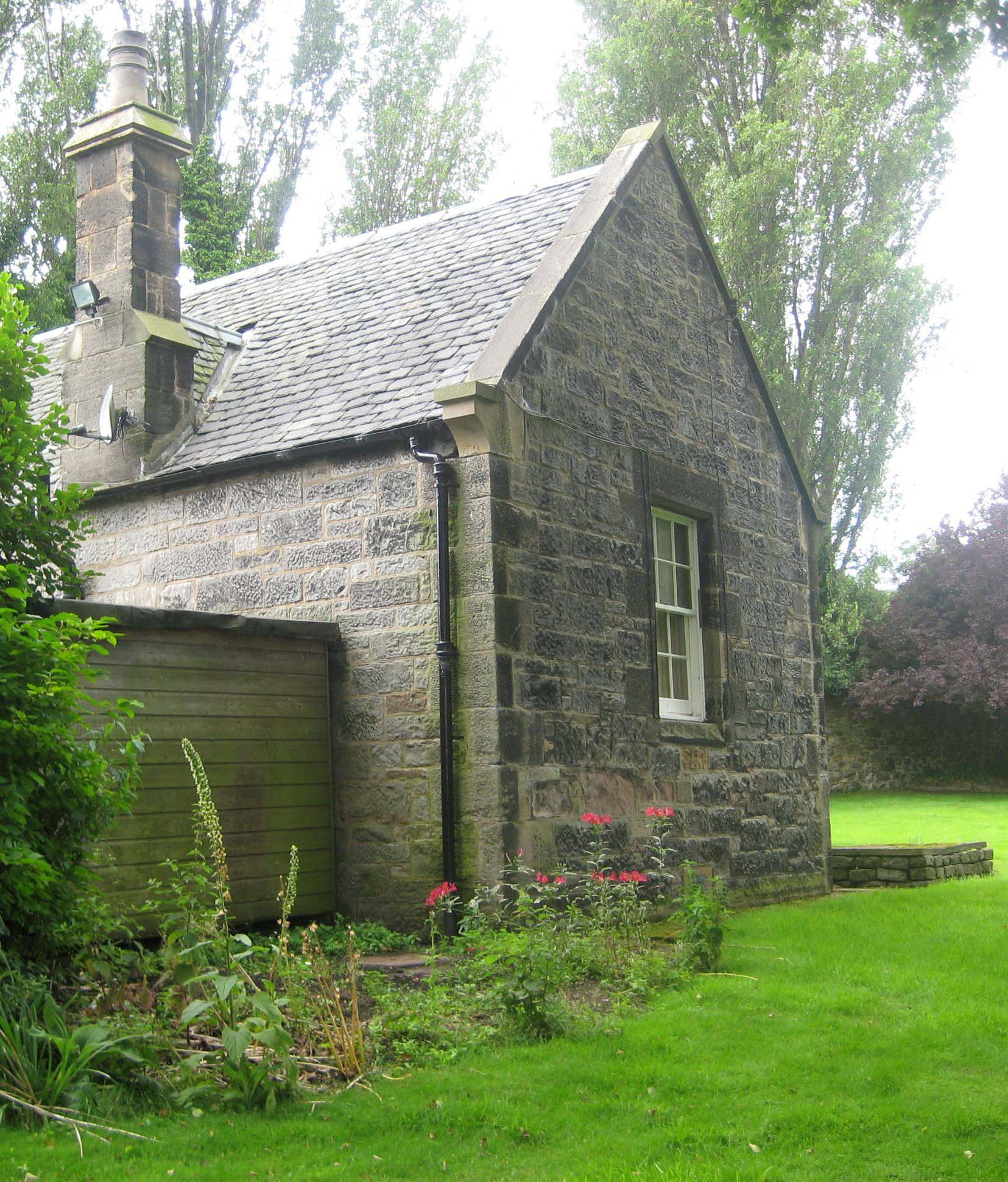
Wells O' Wearie cottage is a small single storey detached building dating from the early 19th century, with an addition c. 1880 to the east. The cottage is Category 'B' listed and is constructed of sandstone rubble, bound with lime and finished with ashlar quoins and margins.
The majority of the external masonry has been subsequently cement pointed to various degrees. The roof is pitches, with Scots slate on sarking and zinc ridges.
The property is located within Holyrood Park in Edinburgh and is managed by Historic Scotland. The accomodation comprises of three rooms, plus a kitchen and bathroom. The attic is un-floored and is used for storage.
The area used for the trial was limited to a single room, the living room, which is in the later addition to the property.
While Historic Scotland operatives carried out the majority of the work, with oversight from the District Architect, some work was delivered in conjunction with three industry partners – an insulation installer, a building products manufacturer and an industrial fixings supplier. This approach allowed a degree of discussion and experimentation with alternative insulation materials and installation techniques, responding to the particular conditions found on site.
Improvement measures
Improvements were made to the roof space (sheep's wool insulation), windows (polycarbonate secondary sheeting), floors (wood fibreboard bats) and external walls. As there were three external walls in the living room, three different approaches were trialled:
Blown cellulose
Blown aerogel (silica bead material)
Surface applied insulation
Condensation risk was a key consideration when installing these different measures.
A chimney balloon was also installed, to restrict air movement in winter and during periods of high winds.
-
Pre and post intervention U-value testing was undertaken by Edinburgh Napier University to quantify improvements in the thermal performance of the cottage.
In situ U-value measurements of the external walls, the floor and the ceiling were undertaken using the standard heat flux plate and associated equipment. Relative humidity values for the void behind the existing lath and plaster was also tested. This allowed a pre-intervention baseline figure to be made in order to judge the effectiveness of the upgrade works.
Following the intervention works, a further range of measurements were taken to assess the thermal improvements made. In all areas there was a significant reduction in the U-value. The floor results were particularly encouraging and achieved with a simple new technique. Other interventions were less beneficial, notably the more modest reduction in U-value achieved with the aerogel blanket.
Ceiling
Pre-intervention U-value: 1.4 W/m²K
Post-intervention U-value: 0.2 W/m²K
Retrofit measure: Sheep’s wool, 280 mm
South Wall
Pre-intervention U-value: 1.4 W/m²K
Post-intervention U-value: 1.0 W/m²K
Retrofit measure: Aerogel behind plaster
East Wall (right of window)
Pre-intervention U-value: 1.3 W/m²K
Post-intervention U-value: 0.6 W/m²K
Retrofit measure: Blown cellulose behind lath and plaster
East Wall (left of window)
Pre-intervention U-value: 1.3 W/m²K
Post-intervention U-value: 0.8 W/m²K
Retrofit measure: Blown cellulose behind lath and plaster
North Wall
Pre-intervention U-value: 1.3 W/m²K
Post-intervention U-value: 0.7 W/m²K
Retrofit measure: Blown cellulose behind lath and plaster
Floor
Pre-intervention U-value: 2.4 W/m²K
Post-intervention U-value: 0.7 W/m²K
Retrofit measure: 80 mm wood fibre insulation batts
Window
Pre-intervention U-value: 5.4 W/m²K
Post-intervention U-value: 2.4 W/m²K
Retrofit measure: Secondary glazing – magnetised acrylic sheet
-
Feedback from the resident was not as positive as might have been expected, as it was felt that the living room was still cold. That said, it was not regularly used and only intermittently heated. The room has three external walls and the adjacent room is the bathroom, itself modestly heated, which may explain the low temperatures.
The work at Wells o’ Wearie has proved that with a range of relatively simple interventions, the thermal performance of traditional fabric can be improved. The building has now been re-occupied and has completed its second winter. The technical reservations regarding the filling of cavities (and condensation risk), while understandable, seem unfounded although the results of longer term monitoring and assessment of the relative humidity within the walls and the filled cavity will be required to answer this definitively.
This project has shown that a range of simple and appropriate techniques can show significant benefits in a traditionally built structure.
-